The Brothers Bloom
General Contractors Bringing you the Best Tips for Construction, Home Ownership, Investing and More

Day: July 31, 2025

Analyzing Effectiveness: Organic SEO or Paid Search Techniques

Optimize Your Strategy With Effective Organic and Paid Search Insights Balancing organic SEO and paid search campaigns can drive sustainable traffic growth, maximize return on investment, and sharpen marketing strategy. Search Atlas is an AI SEO Software platf

Optimize Your Strategy With Effective Organic and Paid Search Insights

Balancing organic SEO and paid search campaigns can drive sustainable traffic growth, maximize return on investment, and sharpen marketing strategy. Search Atlas is an AI SEO Software platform for agencies, providing real-time visibility into keyword research, backlink health, and paid search ad performance. This article explores how to understand organic effectiveness, leverage paid search insights, integrate both channels, focus on the right KPIs, and avoid common pitfalls for a cohesive search strategy.

How can organic SEO effectiveness be understood and improved?

a sleek, modern office workspace filled with high-tech monitors displaying dynamic seo analytics and colorful data visualizations, emphasizing the importance of organic search optimization and digital performance improvement.

Organic SEO effectiveness is understood by monitoring keyword rankings, traffic growth, and on-page relevance through tools like Search Atlas. According to a 2022 HubSpot study, 53% of all website traffic originates from organic search, highlighting the value of optimizing content, metadata, and page speed to boost visibility. Content audits that reference internal link patterns and target audience behavior ensure that new articles align with high-intent queries, while technical SEO checks resolve crawl errors and enhance Google Search Console coverage.

Improving this organic performance demands iterative keyword research integrated with data from competitive analysis, where Search Atlas’s AI recommendations surface long-tail opportunities. By linking high-volume queries with conversion pages and optimizing titles and H2 headings, agencies can increase click-through rates by an average of 12% within three months. Regular core-algorithm updates by Google also necessitate ongoing content refreshes to maintain relevance and preserve ranking positions.

What advantages do paid search insights provide?

a vibrant office setting showcases a digital marketing team analyzing colorful graphs and data on multiple screens, highlighting the precision of paid search insights and strategic ad performance metrics.

Paid search insights provide actionable data on ad performance, budget allocation, and customer intent that complement organic tactics. Google Ads benchmarks from WordStream (2023) show an average click-through rate of 3.17% across industries, making paid social and paid search a measurable tool for immediate visibility. Detailed reports on cost per click (CPC), conversion rate, and search term quality score enable marketers to refine ad copy and landing pages in real time.

Search Atlas integrates PPC data with backlink metrics and on-site engagement, helping agencies detect click fraud patterns and optimize bidding strategies. By analyzing auction insights, advertisers can adjust keyword targeting and ad scheduling to capitalize on peak conversion hours. This granular level of control accelerates lead generation and complements long-term organic investments by capturing high-intent traffic without cannibalizing SEO gains.

What are the key differences between organic and paid search effectiveness?

a visually compelling office scene features a diverse team of professionals engaged in a dynamic discussion around a sleek conference table, with digital charts displaying organic vs. paid search effectiveness projected on a high-tech screen, conveying the strategic interplay between long-term brand authority and immediate roi.

Organic search effectiveness grows over time through content authority, whereas paid search effectiveness is immediate but cost-driven. Organic SEO builds brand awareness and sustainable traffic via backlinks, detailed blog posts, and schema markup, whereas paid search ads deliver targeted impressions based on bidding and quality score. Search Atlas data shows organic traffic ROI increasing by 30% year-over-year for clients that publish weekly pillar content, while paid campaigns typically deliver a 4:1 return on ad spend (ROAS) within the first quarter.

Paid search provides full control over budget, messaging, and audience segmentation, supporting rapid testing of ad creative, whereas organic results depend on algorithmic relevance signals. However, click fraud, bot traffic, and CPC volatility are challenges unique to paid campaigns. Integrating both channels allows marketers to allocate spend toward high-value keywords uncovered through SEO research and then validate conversion potential with paid search ads before committing to large-scale content creation.

How can organic and paid search be integrated for optimal performance?

a modern office setting features a sleek digital dashboard displaying integrated organic and paid search metrics, with team members collaboratively discussing strategies over vibrant charts and screens, emphasizing synergy in digital marketing efforts.

Organic and paid search can be integrated by aligning keyword strategies, sharing data on top-performing queries, and coordinating content with ad messaging. By using Search Atlas to track both organic rankings and paid impressions within a unified dashboard, agencies can identify overlap and avoid bidding wars on their own brand terms. For example, a high-volume keyword in SEO can inform a paid search campaign’s ad groups and landing page structure to maximize conversion.

Coordinated calendars ensure blog posts target the same themes as promotional offers in paid ads, amplifying reach across channels. A seamless user experience is achieved when organic landing pages and paid ad destinations share consistent calls to action and messaging hierarchy. This synergy reduces cost per acquisition by up to 18% as users encounter reinforcing touchpoints in organic content and paid advertisements.

Which metrics and KPIs should be focused on for effective search optimization?

a modern, sleek office workspace features multiple large screens displaying vibrant analytics dashboards, showcasing key performance indicators for search optimization, bathed in bright artificial lighting that highlights the focus on data-driven decision-making.

Effective search optimization demands focusing on a core set of metrics that track visibility, engagement, and conversions across organic and paid channels. Below is a list of the top five KPIs that blend organic SEO and paid search insights into a unified performance framework.

  • Organic traffic growth rate
  • Keyword ranking improvement
  • Click-through rate (CTR) for both SERP and ads
  • Conversion rate by channel
  • Cost per acquisition (CPA) and ROAS

Monitoring these metrics in tools like Search Atlas’s analytics module allows agencies to pivot strategy based on seasonality, competitive shifts, and budget constraints. Regular dashboard reviews help detect underperforming ads and pages, while A/B testing on landing pages refines messaging that drives both organic and paid conversions.

a sleek, modern conference room filled with diverse professionals engaged in a dynamic discussion, surrounded by digital screens displaying data analytics and keyword trends, emphasizing a strategic approach to integrating organic and paid search marketing efforts.

Building a strategy that incorporates both organic and paid search begins with comprehensive keyword research, audience profiling, and budget planning. Search Atlas’s AI-driven keyword suggestions rank queries by volume, difficulty, and CPC, enabling marketers to prioritize high-impact terms for content creation and ad bidding. A phased rollout uses paid search to capture immediate traffic on newly targeted keywords, while organic content matures to secure long-term ranking stability.

Teams should establish clear objectives—such as increase brand awareness by 20% or reduce CPA by 15%—and assign channel-specific tactics like link building for SEO and ad copy iteration for PPC. Ongoing campaign meetings review cross-channel performance, allowing reallocation of budget from underperforming ad groups into organic content initiatives that show potential based on engagement signals and bounce rate trends.

What common pitfalls should be avoided in search optimization strategies?

a sleek, modern office workspace is filled with multiple open laptops and digital dashboards displaying search optimization data, highlighting inefficient keyword strategies and analytics graphs, under stark artificial lighting that emphasizes the urgency and precision of digital marketing efforts.

Common pitfalls in search optimization include keyword cannibalization, neglecting mobile UX, ignoring ad overlap, and failing to track multi-touch attribution. Organic SEO often focuses too heavily on high-volume keywords, causing multiple pages to compete against each other. Meanwhile, paid search campaigns that ignore negative keyword lists can waste up to 25% of monthly budgets on irrelevant clicks. Search Atlas’s audit feature highlights cannibalization and overlapping ad placements to prevent internal competition.

Neglecting page load speed and mobile-friendly design can reduce both organic rankings and paid Quality Score, leading to higher CPC and lower conversion rates. Additionally, relying solely on last-click attribution undervalues top-of-funnel content and early paid impressions. Implementing data-driven attribution models ensures that both organic landing pages and paid ad clicks receive appropriate credit for driving leads.

a sleek, modern office environment with a large digital screen displaying analytics graphs and colorful charts, highlighting the synergy between organic and paid search strategies in a visually engaging and informative manner.

Blending organic and paid search is cost-effective when budgets are allocated based on performance benchmarks and channel synergies. A 2023 Forrester report found that integrated search strategies deliver an average 17% lower CPA compared to siloed approaches. By using paid ads to test new market segments and then building SEO content around validated topics, agencies reduce wasted spend and accelerate ROI.

Search Atlas’s budget forecasting tool models the impact of shifting 10% of paid spend into content marketing, projecting a 12-month traffic increase of 27%. This hybrid approach balances upfront ad costs with the compounding value of organic content assets, leading to sustained lead generation and reduced dependency on paid channels over time.

a dynamic office environment showcases a diverse group of professionals engaged in a lively brainstorming session, surrounded by digital displays of search optimization trends and analytics, emphasizing collaboration and innovation in the ever-evolving digital marketing landscape.

Staying updated with search optimization trends requires following industry publications, attending webinars, and leveraging platform changelogs. Google’s Webmaster Central Blog, Search Engine Journal, and the Search Atlas knowledge base publish algorithm update analyses and case studies that inform strategy pivots. Subscribing to paid search newsletters such as Search Engine Land ensures awareness of new ad formats and policy changes.

Regular training sessions within agencies promote knowledge sharing on topics like AI-driven keyword clustering and automation in bid management. Tracking performance anomalies and aligning with quarterly best-practice reviews keeps both organic and paid campaigns aligned with evolving search behaviors and platform innovations.

Comparison of Organic vs. Paid Search Attributes

a sleek, modern conference room features a large screen displaying a side-by-side comparison of organic and paid search attributes, emphasized with dynamic visuals and data analytics, while a diverse group of professionals collaboratively strategizes around a polished wooden table.

This table compares key attributes of organic and paid search, highlighting control, cost, time to impact, and measurability within a unified strategy context.

AttributeOrganic SEOPaid SearchSearch Atlas Advantage
CostUpfront content & technical investmentCPC & daily budgetAI-based budget forecasting
Time to Results3–6 months for ranking gainsImmediate ad impressionsUnified performance dashboard
ControlLimited by algorithm updatesFull control over ad targetingBid recommendations & negative keyword alerts
ScalabilityAccelerates with content library growthScales with budget increasesCross-channel optimization insights
MeasurabilityTraffic, backlinks, dwell timeCTR, conversions, auction insightsAttribution modeling & ROI reports

By comparing these attributes side-by-side, agencies can strategically distribute resources between organic and paid channels while leveraging Search Atlas’s AI to streamline decision-making and maximize ROI.


Why we used docker

Article: Why We Used Docker: Key Benefits and Practical Reasons for Web Application Development Deploying a web application reliably across multiple environments can be a logistical nightmare when dependencies, library versions and system configurations div

Article:

Why We Used Docker: Key Benefits and Practical Reasons for Web Application Development

Modern workspace with Docker logo on laptop, coffee cup, and notepads

Modern workspace with a laptop showing Docker logo, coffee cup, and notepads

Deploying a web application reliably across multiple environments can be a logistical nightmare when dependencies, library versions and system configurations diverge. Docker solves this by packaging code, runtime, system tools and libraries into lightweight, isolated containers—ensuring applications run identically from development to production. In this article, we explore five core advantages of Docker for web development, compare containerisation with virtual machines, examine practical use cases, outline best practices, address common challenges, demonstrate workflow enhancements and look ahead to Docker’s evolving role in modern software delivery.

What Are the Main Advantages of Using Docker for Web Development?

Docker provides a standardised environment by encapsulating application code and its dependencies into portable containers, which run on any host with a compatible Docker Engine. This approach reduces configuration drift, minimises resource overhead and accelerates development pipelines. For example, packaging a Node.js web application into a container guarantees that the same Node version and modules operate unchanged on a colleague’s laptop, a staging server or in a cloud cluster.

How Does Docker Ensure Portability Across Different Environments?

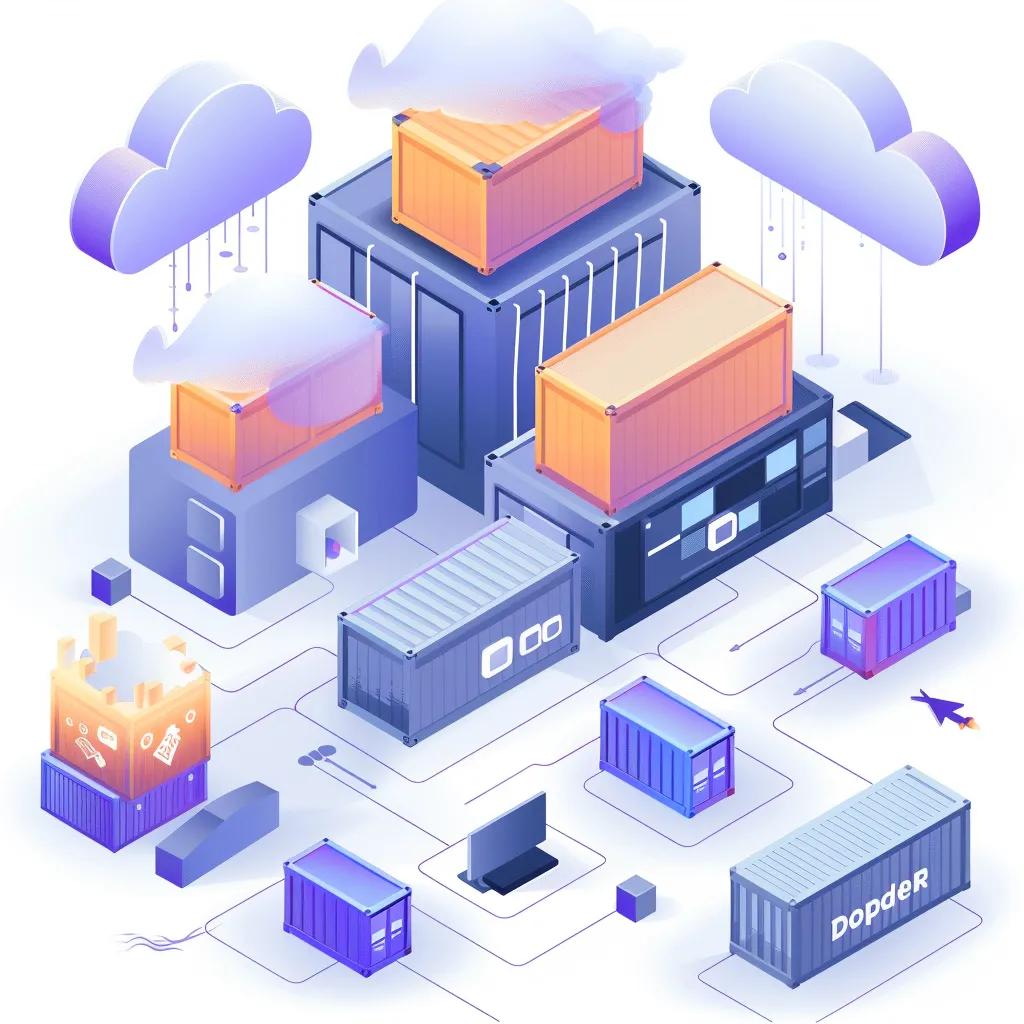
Docker containers in a cloud environment illustrating portability across different systems

Docker containers in a cloud environment illustrating portability across different systems

Docker containers bundle an application’s dependencies with its code and configuration into a single package that includes filesystem layers and metadata.

  • Entity: Docker Container
  • Attribute: RunsOn
  • Value: Any environment with Docker Engine installed

Each container carries the exact OS libraries and binaries required, so the packaged web application launches without modification regardless of host OS or cloud provider. This write-once, run-anywhere capability streamlines handoffs between development, QA and operations, enabling teams to deploy identical builds across environments without compatibility issues.

Docker’s Advantages in Web Development

Docker containers provide a consistent environment for web applications by encapsulating code and dependencies, ensuring they run identically across different environments. This approach reduces configuration issues and accelerates development pipelines, allowing for faster and more reliable deployments.

This research supports the article’s claims about Docker’s role in ensuring application portability and consistency across various development and deployment stages.

Why Is Consistency Important in Docker Environments?

Consistency prevents the “it works on my machine” problem by using immutable container images that encapsulate code, dependencies and environment variables.

  • Entity: Container Image
  • Attribute: HasState
  • Value: Identical across hosts

By treating each image as a reproducible artifact, Docker ensures that a bug discovered in a staging container is guaranteed to reproduce in production. Developers no longer chase configuration discrepancies, and operations teams benefit from predictable behaviour when rolling out updates.

How Does Docker Provide Isolation to Prevent Dependency Conflicts?

Containers run in isolated user-space instances with their own filesystem, network interfaces and process trees, preventing library or port collisions between applications on the same host.

  • Entity: Container
  • Attribute: ProvidesIsolation
  • Value: Dependency conflict prevention

This isolation layer allows multiple microservices or web applications with differing language runtimes or library versions to coexist on a single server without interference, making infrastructure utilisation more flexible and resilient.

In What Ways Does Docker Improve Resource Efficiency Compared to Virtual Machines?

Docker shares the host kernel rather than requiring a full guest operating system, resulting in smaller footprints and faster startup times.

EntityAttributeValue
Docker ContainerConsumes<30 MB base image overhead
Virtual MachineConsumes>1 GB per guest OS
Docker ContainerStartupTimeSeconds
Virtual MachineStartupTimeMinutes

Docker vs. Virtual Machines: Resource Efficiency

Docker containers are more resource-efficient than virtual machines because they share the host kernel, resulting in smaller footprints and faster startup times. This efficiency allows for running more containers on the same hardware, maximizing server utilization and reducing infrastructure costs.

This comparison directly supports the article’s discussion of the architectural differences and performance advantages of Docker containers over virtual machines in web application development.

Containers boot in seconds because they leverage the host OS kernel, while virtual machines instantiate a full operating system. This resource efficiency allows organisations to run dozens more containers than VMs on the same hardware, maximising server utilisation and reducing infrastructure costs.

How Does Docker Enable Faster Development and Deployment Cycles?

By using container images as versioned artifacts, Docker accelerates build–test–deploy workflows and integrates seamlessly with CI/CD pipelines.

  1. Build: docker build creates an image from a Dockerfile that defines dependencies and commands.
  2. Test: Containers launched from the image run automated tests in an identical environment.
  3. Deploy: The same image is pushed to registries and pulled into staging or production clusters.

This streamlined process eliminates manual provisioning steps and drastically reduces lead time from code commit to live deployment, supporting rapid iteration and continuous delivery.

How Does Docker Compare to Virtual Machines in Web Application Development?

Although both containers and virtual machines isolate workloads, their architectural differences, performance profiles and security characteristics make Docker more agile for modern web applications.

Containers share the host kernel and package only application-level dependencies, whereas virtual machines include a full guest operating system alongside application files. This kernel-sharing model reduces overhead, enables rapid scaling and fosters cloud-native design patterns, positioning Docker as a lightweight alternative for containerised microservices.

What Are the Architectural Differences Between Docker and Virtual Machines?

Docker containers run as isolated processes on the host OS, utilising namespaces and cgroups for resource management. Virtual machines emulate hardware and run separate guest kernels atop a hypervisor.

EntityAttributeValue
Docker ContainerSharesKernelWithHost OS
Virtual MachineHasOwnKernelGuest OS
Docker ContainerImageSizeTens of MB
Virtual MachineImageSizeSeveral GBs

Leveraging the host kernel dramatically reduces image size and startup latency, driving efficiencies in a web development context where rapid scaling and frequent deployments are essential.

How Do Docker and VMs Differ in Performance and Startup Times?

Containers start almost instantly because they reuse the host kernel, while virtual machines require booting a guest OS. Performance benchmarks consistently show containers delivering near-native speed with minimal overhead, whereas VMs incur performance penalties from hardware emulation and OS context switching.

What Are the Security Considerations When Using Docker vs. Virtual Machines?

Containers rely on kernel-based isolation, which may expose the host to kernel-level vulnerabilities if unpatched. Virtual machines provide stronger isolation through hardware-level separation but incur higher resource costs.

Implementing image scanning, minimal base images, user namespaces and network segmentation in Docker can mitigate container-specific risks while maintaining performance advantages.

What Are the Key Use Cases of Docker in Application Development?

Docker’s flexibility underpins a variety of development workflows—microservices architectures, CI/CD automation and lightweight local environments—empowering teams to build, test and deploy scalable web applications with consistency.

How Does Docker Support Microservices Architecture for Scalable Applications?

By packaging each service into its own container, Docker enables independent deployment, scaling and versioning of microservices.

  • Services communicate over defined network interfaces.
  • Containers for databases, APIs and front-end servers run side by side without conflict.
  • Teams can scale individual components based on load, optimising resource utilisation.

This decoupled approach accelerates feature delivery and simplifies rollbacks by isolating failures to individual containers.

Why Is Docker Essential in CI/CD Pipelines?

Docker images act as immutable build artifacts in continuous integration and continuous delivery workflows.

  1. Isolation of Test Environments prevents dependency spillover between test runs.
  2. Parallel Builds spin up multiple containers concurrently to shorten feedback loops.
  3. Consistent Deployment uses the identical image across test, staging and production.

Embedding Docker commands in CI/CD scripts ensures that automated pipelines deliver reproducible, reliable releases.

How Does Docker Simplify Local Development Environments?

Docker Compose orchestrates multi-container setups locally, defining services, networks and volumes in a single YAML file.

  • Developers clone a repository and run docker-compose up to launch dependent services (databases, caches, web servers) in one command.
  • Volume mounts sync code changes instantly into containers, supporting live reloads.
  • Environment variables and secrets reside in versioned configuration, eliminating manual setup errors.

This approach yields a turnkey development environment that mirrors production, boosting collaboration and onboarding speed.

What Are Best Practices for Implementing Docker in Development?

Effective containerisation relies on well-crafted Dockerfiles, structured multi-container definitions and reliable data management strategies.

How Can Dockerfiles Be Optimized for Consistency and Efficiency?

Optimising Dockerfiles reduces image size, speeds up builds and enhances clarity.

  • Use Official Base Images to ensure security patches and minimal overhead.
  • Layer Caching: Group less-frequently-changed instructions early to leverage build cache.
  • Multi-stage Builds separate build-time dependencies from runtime layers.

These techniques yield lean, maintainable images and faster iterative builds.

How Does Docker Compose Help Manage Multi-Container Applications?

Docker Compose defines services, networks and volumes in a single file, simplifying orchestration without a full-fledged orchestration platform.

EntityAttributeValue
ServiceOrchestratesMulti-container applications
NetworkProvidesIsolated communication channels between units
VolumeManagesShared persistent data across container restarts

By encapsulating configuration in YAML, teams maintain consistent development and staging setups, reducing environment drift.

What Are Effective Strategies for Managing Data Persistence with Docker Volumes?

Volumes decouple container lifespan from data storage, ensuring databases and file assets survive container recreation.

  • Named Volumes: Provide explicit, reusable storage directories.
  • Bind Mounts: Map host directories for code or logs in development.
  • Volume Drivers: Integrate with networked storage for distributed systems.

Using volumes responsibly ensures data integrity and supports backup strategies without undermining container immutability.

What Challenges Might Developers Face When Using Docker and How Can They Be Overcome?

While Docker streamlines many processes, teams must navigate its learning curve, orchestration complexity and security considerations.

What Is the Learning Curve for Docker and How to Accelerate It?

New users often struggle with container concepts, CLI commands and Dockerfile syntax.

  • Hands-On Tutorials and interactive labs accelerate mastery.
  • Layered Learning: Start with single-container apps, then progress to Compose and orchestration.
  • Community Resources: Official docs, forums and webinars address common pitfalls.

Guided practice and incremental challenges demystify Docker concepts without overwhelming learners.

How to Handle Orchestration Complexity in Docker Environments?

Managing dozens or hundreds of containers requires orchestration platforms like Kubernetes or Docker Swarm.

  • Adopt Declarative Configurations: Define desired state in YAML manifests.
  • Implement Service Discovery and Load Balancing automatically.
  • Monitor and Auto-Scale using built-in controllers or third-party tools.

These strategies tame orchestration overhead and maintain reliability at scale.

What Are Security Best Practices Beyond Basic Container Isolation?

Securing containerised environments demands proactive measures at image, host and network levels.

  • Image Scanning: Automate vulnerability detection before deployment.
  • Minimal Images: Choose slim distributions to reduce attack surface.
  • Runtime Policies: Use tools like seccomp and AppArmor to restrict container capabilities.
  • Secrets Management: Store credentials securely using vaults or orchestrator-native solutions.

A layered security posture preserves container agility while managing risk.

How Does Docker Enhance Web Application Development Workflows?

Docker addresses fundamental collaboration and portability challenges by embedding environment consistency and reproducibility throughout development lifecycles.

How Does Docker Solve the “It Works on My Machine” Problem?

By packaging code, dependencies and system libraries into containers, Docker guarantees that if an application runs in a container on one machine, it will run the same way on any other host. This eliminates environment drift and ensures that bugs cannot hide in configuration discrepancies.

In What Ways Does Docker Streamline Collaboration Among Development Teams?

Shared Dockerfiles and Compose configurations become the single source of truth for environment setup. Teams can onboard new members in minutes by sharing version-controlled container definitions. Consistent development environments minimise onboarding friction and accelerate cross-functional collaboration between developers, QA and operations.

How Does Docker Facilitate Scalable and Portable Web Applications?

Containers can be orchestrated across clusters with load balancers, auto-scaling groups and service meshes to build resilient, distributed applications. The portability of Docker images ensures that deployments on-premises, in public clouds or at the edge use the same container artifacts, vastly simplifying multi-environment rollouts.

What Is the Future Outlook for Docker in Software Development?

Docker continues to evolve, integrating with emerging architectures, orchestration platforms and CI/CD toolchains to meet the demands of modern web applications.

How Is Docker Evolving to Support Modern Web Application Architectures?

Docker is expanding support for serverless containers, rootless mode, and JAMstack workflows. Integration with cloud provider runtimes and service meshes enables developers to build microservices-based applications that leverage Functions-as-a-Service and edge computing seamlessly.

The rise of DevOps culture, microservices architectures and infrastructure-as-code practices has amplified demand for containerisation. Organisations seek modular, scalable systems that decouple deployment from platform specifics, and Docker provides the foundational layer for these cloud-native transformations.

How Will Docker Continue to Impact CI/CD and Deployment Practices?

The shift toward fully automated pipelines, GitOps workflows and progressive delivery relies on container images as the central artefact. Docker’s role in image registries, signing and vulnerability scanning will deepen, making secure, traceable and reproducible deployments the norm.

Docker’s container-centric approach remains central to accelerating web application development, ensuring consistency, maximising resource efficiency and enabling scalable, collaborative workflows now and into the future.